A Hall Bench or a Narrow Console for a Cottage Entry?
Choose a hall bench or narrow console by the jobs your cottage entry must handle, from pulling off muddy boots to keeping keys and post in reach.
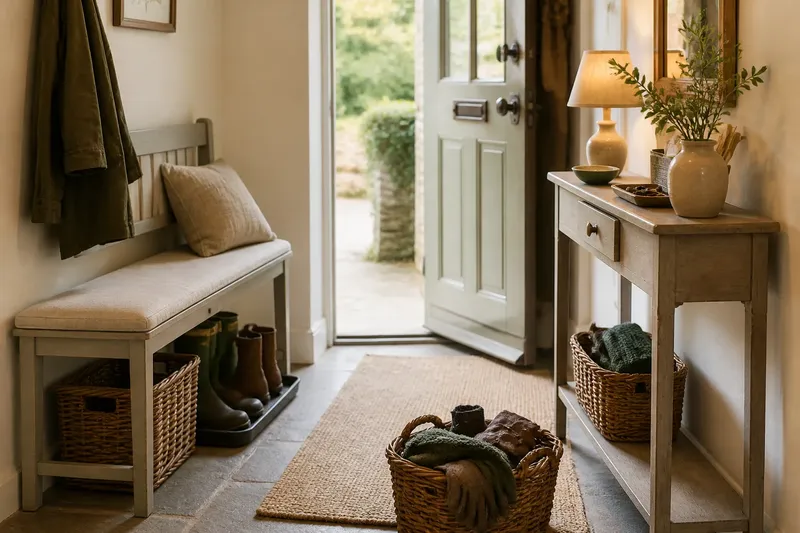
A basket of damp gloves lands on the hall floor while you wrestle a boot off at the door. In a small cottage entry, choosing a hall bench or a narrow console comes down to what you need your hands, feet and everyday belongings to do when you arrive.
Both pieces can sit neatly against a wall, but they serve different routines. A bench gives you somewhere to sit and may take shoes underneath; a console offers a raised surface for keys, post or a lamp. The better choice is the one that supports the busiest part of your arrival without making the doorway awkward.
Start with the moment that causes the most friction
Think through a typical return home. Do you arrive carrying shopping, stoop to remove muddy footwear, or hunt for keys and dog leads? A piece of furniture can help with one of those tasks, but a narrow hall rarely has room to perform every job at once.
Notice where people naturally pause. If someone sits on the stairs to remove boots, or balances a bag on the floor to free both hands, a bench may answer a real need. If the daily irritation is a scatter of keys, letters and spectacles, a console may give those things a clear landing place.
Also consider who uses the entry. A bench can be especially helpful for a child learning to manage shoes or for anyone who finds balancing while dressing uncomfortable. A console suits a household that needs a standing-height surface and can keep the floor clear. These are practical preferences, not rules: a household might need both functions, but the room still has to allow a comfortable route past them.
A bench earns its place through sitting and storage
A hall bench is strongest when footwear is part of the daily routine. Sitting down can make changing shoes less of a scramble, while the space below may hold a pair of everyday shoes, a lidded basket or a boot tray. Choose a form that leaves enough clear floor for people to enter and turn without sidestepping a crowded row of footwear.
Open space beneath a bench makes shoes easy to see and retrieve, though it can look untidy if several pairs collect there. A basket gives loose items a boundary, but it needs to be easy to pull out. A built-in shelf is useful for shoes that are worn often; it is less helpful if its shape or position makes cleaning underneath difficult.
Look at the bench’s seat as a working surface, not just a perch. A hard wooden seat is straightforward to wipe, while a cushion can make sitting more pleasant but may need regular attention where coats drip or muddy trousers brush against it. A removable, washable cover can be a sensible compromise. Avoid turning the seat into permanent storage for parcels and folded clothing, or the main job of sitting disappears.
In a cottage with an uneven floor or a worn wall, a simple, visually light bench can feel less imposing than a bulky storage unit. Check how its legs meet the floor and whether the seat edge catches coats or bags passing close by. The aim is a place to pause, not another obstacle in the narrowest part of the hall.
A narrow console gives small arrivals a landing place
A slim console suits an entry where standing organisation matters more than sitting. A shallow top can hold a key dish, a small tray for loose change and perhaps a lamp if there is a suitable socket. A drawer is handy for items that are best kept out of sight, such as spare keys or stamps, while a lower shelf can take a basket for gloves.
Its usefulness depends on restraint. A console crowded with mail, shopping bags and decorative objects quickly becomes a sorting problem rather than a landing place. Give the surface a clear purpose: perhaps keys and the current day’s post, with a small container for the items that otherwise migrate between pockets.
Check the route around it before choosing a shape. A console with legs that project at the corners can catch a passing bag even if the top looks narrow. A wall-hung shelf may leave more floor visible, but it cannot provide the same storage or stability as a freestanding table. If the wall is old, uneven or fragile, think carefully about whether fixing furniture to it is appropriate; seek a qualified person where safe installation is uncertain.
Lighting can make a console especially useful in a dim entry, but a lamp should not crowd out the everyday essentials. A small shaded lamp may soften the feel of the space and help with finding keys after dark. Keep cords out of the walking route and follow the lamp maker’s instructions.
Choose by the shape of your arrival
Say you come in from the garden with muddy boots, a coat and a basket of vegetables. If you often need to sit while removing footwear, imagine placing a compact bench beside the door, with one easy-to-clean tray below for the boots you wear most. The expected result is a clear place to sit and a contained spot for the mess, rather than shoes spreading across the floor.
Now imagine a different routine: you arrive from work with keys, post and a bag, but usually remove your shoes elsewhere. A slim console with a key bowl and one drawer may suit better. The expected result is that small essentials have a consistent landing place while the walking route remains open.
These imagined routines make the choice easier because they focus on repeated actions rather than an idealised picture of the hall. If both routines are common, ask which one causes more inconvenience and give that task the better position. A small hook rail or a basket elsewhere may handle the secondary need without forcing one piece of furniture to do everything.
Which entry furniture answers your daily routine?
Can a narrow console replace a hall bench?
It can replace the bench’s role as a landing place for keys and post, but it does not provide a seat for changing shoes. If sitting is a frequent need, consider whether another suitable seat is already close by before giving up the bench.
Is a bench useful if I do not store shoes in the hall?
Yes, if you regularly need somewhere to sit while taking off a coat, sorting a bag or helping a child with outdoor clothing. Without a repeated sitting task, the bench may occupy floor space for little practical return.
What should go on a cottage hall console?
Keep only the things you reach for while leaving or arriving, such as keys, a small post tray or a container for dog leads. A clear surface is easier to use than one shared with keepsakes, spare shopping bags and general household clutter.
How can I tell if a console is too deep for my entry?
Mark the proposed footprint on the floor with removable tape, then walk past it carrying the kind of bag or basket you normally bring in. If the marked area makes turning, opening a nearby door or passing another person uncomfortable, look for a shallower option or choose a different position.
Let the entry stay easy to pass through
Before settling on either piece, check the door swing, nearby hooks, radiator and the route to the next room. A bench can obstruct a door when placed too close to its arc; a console can pinch the route where the hall narrows. Measure the available space and follow the furniture maker’s guidance for placement and use where it applies.
It is not worth filling the hall with matching baskets, a mirror, a lamp and decorative objects just because there is room for them on paper. Add only what makes the arrival routine easier. A single tray on a console or one basket under a bench is often enough to establish order.
For a cottage entry, the best choice is the piece that helps with the action you repeat most: sitting to remove boots or setting down the small things you carry. Keep that main job visible, and the hall bench or narrow console will feel like part of the household’s rhythm rather than furniture to work around.