The Matching-Set Mistake in a Cottage Room
A cottage room need not rely on matching furniture. Use one repeated colour, material or shape to connect varied pieces without making them feel identical.
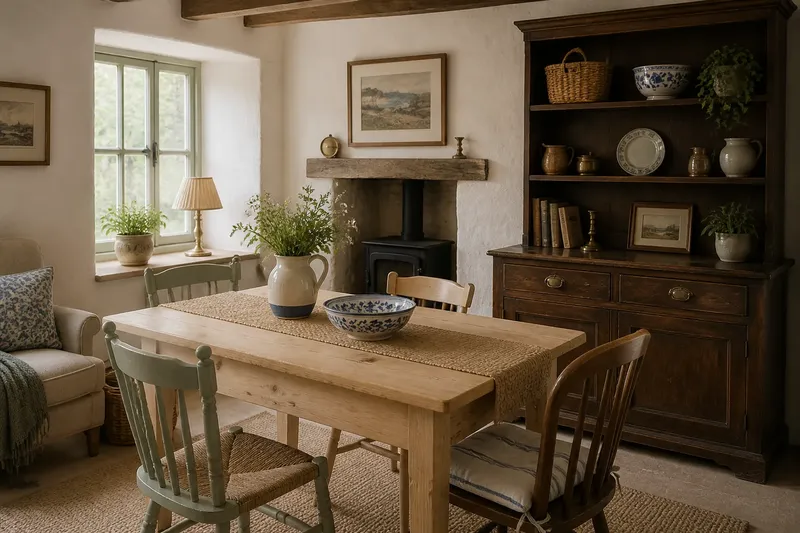
A pine table, a painted chair and a dark oak cupboard can sit comfortably in the same cottage room, even if none came as part of a set. The trick is not to make every furnishing match, but to repeat one quiet detail so the differences feel considered rather than accidental.
Why does a matching furniture set feel wrong in a cottage room?
A matching set gives a room an immediate sense of order, but it can also flatten the character that comes from age, repair and changing use. When the dining table, chairs, sideboard and shelves share the same finish and shape, the eye has little to pause on. The room may look furnished, yet seem less like a place that has gathered useful things over time.
That does not mean matching pieces are a mistake in every home. A consistent set can be a sensible choice where storage is limited or a room needs a calm visual backdrop. In a cottage, though, too much uniformity may compete with features such as uneven plaster, exposed beams, a small fireplace or a deep window recess. Varied furniture can echo that sense of layers without trying to imitate it.
There is a difference between variety and disorder. A room can include several wood tones and still feel settled if the pieces share a visual link: a repeated colour, a similar curve, a familiar material or a common scale. The aim is not to disguise the history of each object. It is to give the eye a gentle thread to follow.
What should repeat if the furniture does not match?
Choose one quiet detail that can appear in a few places without becoming the room’s main feature. It might be a muted green, the warm brown of aged brass, a rounded edge, a woven texture or the dark line of iron hardware. Repetition works best when it feels like a small echo, not a theme imposed on every surface.
Colour is often the easiest link. If a faded blue appears on a cupboard, it can return in a cushion, a jug or the rim of a framed print. The objects need not be the same shade; a softened, related family of colour can do the work. Keep the repeated colour to accents if the furniture already has strong finishes.
Material can connect pieces just as effectively. A rush-seated chair might sit near a wicker basket, while a small oak frame picks up the warmth of a pine table. One material need not dominate. A few touches of brass on a lamp and a drawer pull can make a painted cabinet feel at home beside older timber.
Shape is subtler. A curved chair back, a round mirror and a bowl with a softly rolled rim can repeat a rounded line without looking like a coordinated collection. Or use a shared detail such as simple black iron fittings on otherwise different pieces. Pick a link that already belongs in the room, rather than adding one simply to satisfy a decorating rule.
How can different wood finishes sit together?
Start by noticing what each wood contributes. Pale pine often reads as light and informal; deeper oak can feel weightier; a stained or painted piece may provide contrast rather than another wood tone. Put the main pieces where they serve the room, then look at their relationship from the doorway and from the usual seat. A small change in position can help more than trying to make the finishes identical.
Use a bridge between noticeably different tones. A woven runner, a neutral rug, a linen shade or a basket can sit between a pale table and a dark cupboard, giving the eye a softer transition. A framed picture with a simple timber frame may also connect them, especially if its colour is close to one of the larger pieces.
It is usually not worth sanding or staining sound furniture just to force a uniform finish. That can remove a useful patina, create more work than the room needs and leave a piece looking newly altered beside genuinely old surfaces. If a finish is damaged or needs care, follow the furniture maker’s guidance or ask a furniture conservator about a valuable or fragile object.
How do I mix old and newer household objects?
Give each object a clear role, then allow a few of them to share a detail. A modern reading lamp can work beside an old armchair if its shade is calm and its metal finish relates to a nearby handle or frame. A new ceramic jug can sit on a worn table if its colour repeats a note in a cushion or picture.
Think about scale as well as style. A tiny ornament placed beside a large cupboard may disappear, while a broad lamp can crowd a narrow side table. Grouping is useful, but leave breathing room: a tray with a few useful objects can look settled where a line of unrelated small pieces might feel fussy.
Say you have inherited a dark oak sideboard and bought a pale pine table for a small eating area. Imagine adding a woven runner in a natural tone and placing a blue-and-white bowl on the table, with a small blue detail in a print above the sideboard. The expected effect is not a matched suite; it is a modest colour and texture link that lets both pieces keep their own character.
What should I consider before buying another piece?
Before adding furniture, check whether the room needs the object or only the visual balance you hope it will provide. A second chair may be useful, while another cabinet in the same heavy finish may make a compact room feel crowded. Measure the available space, including the route people use to pass through, and consider what needs to be stored or displayed.
- Check the room’s strongest colour. Decide whether a new piece should repeat it, soften it or provide a deliberate contrast.
- Look at the wood already present. Choose a related warmth or a clear contrast rather than an almost-match that looks accidental.
- Notice repeated shapes. A rounded edge or straight, simple profile can link a new object to existing furniture.
- Consider the surface and texture. Woven cane, painted wood, linen and metal can balance one another when no single finish takes over.
- Check scale and placement. Make sure the piece will leave room for doors, drawers and everyday movement.
- Ask what the object will do. Give storage, seating and display pieces a practical purpose instead of buying a second version for symmetry alone.
If the choice is between a perfectly matching item and one that connects through a single detail, consider how each will sit with the room’s existing character. A near-match in colour or wood tone can sometimes look more unsettled than a confident contrast. Bring home a sample of fabric or paint, or view the piece in the light where it will live, if that is possible.
Can matching pieces still work in a cottage room?
Yes. A pair of bedside tables or two dining chairs can give a room useful balance without making every furnishing part of a set. Repetition is especially helpful where the architecture already has plenty of visual detail, or where a small room benefits from a calmer arrangement.
Keep the matching moment contained. Two similar lamps can flank a bed while a different chest of drawers adds contrast; a pair of chairs can sit at a table that has its own finish and shape. The room then has order in one area, rather than a uniform look from wall to wall.
When considering the matching-set mistake in a cottage room, the useful question is not whether matching is allowed. Ask whether each piece contributes something the room needs, and whether one quiet detail helps the different objects belong together. That is enough structure for variety to feel at home, without sanding away the very differences that make a cottage furnishing worth keeping.